

Cayman's Roads
Unofficially, the number of people living and working here is thought to be at 91,000 (February 2026). With the new CI Government still coalescing around a workable national development strategy, and the emphasis in the tourism sector leaning towards stay-over guests, indications suggest a potential breaking point in Cayman’s already overburdened road and transport systems.
However, Cayman’s key routes have seen changes recently, and the sight of road workers sweltering in the midday sun as drivers navigate seemingly endless traffic cones is common, representing a valiant attempt to alleviate the island’s peak-hour traffic congestion.
With very few public or mass transport options available, commuters have little choice but to use their own vehicles. And, with the Islands’ inhabitants experiencing a serious growth spurt and the National Roads Authority (NRA) estimating the mushrooming population to hit 100,000 by 2036, that means even more cars, vans, trucks, mopeds, scooters, e-bikes and motorcycles on Cayman's roads.

It is no surprise then that in 2023, Deloitte was commissioned by the Government to assess the Island’s public transport systems, finding that CI$25-30+ million of investment is needed to create a government-run bus network. Fast forward 2 years and in October of 2025, a newly appointed Public Transport Board held its first meeting to begin addressing long-standing issues with Cayman’s bus system, including safety, reliability and accessibility. The hope is that this will lead to a more modern transport network, as the group focuses on improving standards, supporting operators and working with stakeholders to deliver better public transport for the community.
In April of 2026, the Ministry of Infrastructure, which oversees the roads, put out a call for qualified consultants to develop a Final Business Case and full system design for a modern public transport system in the Cayman. It’s a step forward, but not the first we’ve seen. Governments have been talking about a national transit system for over a decade, with each one ultimately passing the baton without delivering
The need to find new ways to alleviate rush hour congestion is a contentious issue among residents, and the debate continues to grow in fervour. It is widely believed that the pace of residential development in Grand Cayman is outstripping the highway infrastructure necessary to support it. Nevertheless, as of February 2026, there are several NRA projects in various stages of development.
On This Page
Road Improvement Projects
Moving forward at a snail's pace is the long-gestating East West Arterial extension (aka the Rex Crighton Boulevard) to Frank Sound Road. After environmental impact studies and assessments were completed and readied for presentation to Cabinet, the new Government stated that until the public budget had been approved, there simply isn’t the money to continue the costly project past Phase 1, which terminates opposite the Agricola Drive and Shamrock Road T-junction.
However, in March of 2026, it was announced that initial survey work for the continuation of the project to Lookout Gardens in Bodden Town would commence in April, with construction expected to begin in September, if preparations proceed as scheduled. Almost one year on from the 2025 election, the project seems now to be a priority to improve connectivity and reduce congestion between central and eastern Grand Cayman. Funding for this next phase is included in the current government budget. Later phases are expected to be financed in future budget cycles.
In other positive news, works are complete to enhance traffic flow and improve road safety for all users at the Frank Sound Road and Bodden Town Road intersection, historically an accident blackspot.
Better still, the so-called King’s Connector, which began construction in June of 2024, is scheduled for completion sometime in 2026. It is the realignment and widening of Crewe Road (westbound and eastbound from Grand Harbour). This is the next stage of a multi-phase development that involves increasing the number of lanes on the primary Grand Harbour arterials and their intersections to six, and adding a service road from Edgewater Way. As part of the project, one of the extra traffic lanes became available for road users in August of 2025, running eastbound beyond the Lions Centre. The addition marks the next stage in the ongoing project aimed at boosting overall traffic flow in the area which has long been considered a bottleneck, and the main cause of rush hour traffic for commuters coming from the eastern districts. But with 28,000 vehicles expected to be passing through the area by 2036 (which is a 57% increase on the current amount), the challenge is huge.
Major roadworks along the Hirst Road–Shamrock Road corridor in Savannah began in October 2025 to improve safety, traffic flow and support a new public transportation hub. The project includes lane widening, intersection upgrades and the construction of a bus depot, with works expected to ease congestion and improve travel for motorists and public transport users.
Delayed Projects
Some projects also appear to be on hold whilst the Government manages the public finances carefully, such as the extension and beautification of Godfrey Nixon Way, with a landscaped median connecting Eastern Avenue to the main George Town area. The plans called for an arboreal, neighbourhood feel.
The next phase of the Airport Connector Road, continuing the route all the way to the George Town Barcadere seems to have stalled.
You can find out more about these and other projects by visiting www.caymanroads.com
Cayman's Drivers
There are also over 139 different nationalities represented in Cayman, whether by visitors or residents, which means there are drivers from all around the world where traffic laws can be quite different.
Unfortunately, a significant number of minor accidents stem from drivers' unfamiliarity or outright disregard for these regulations. Moreover, a prevalent issue is the substantial occurrence of reckless driving.
Accident Statistics Paint a Worrying Picture
In 2025, Cayman’s roads continued to see an unacceptably high number of traffic accidents, averaging an alarming nine collisions per day (CR — collective sigh of disbelief). Speeding and driving under the influence remain the primary causes. There was a significant reduction of 33% in speeding fines from 2024 with 2,162 tickets issued in 2025. Thankfully, road fatalities decreased in 2025 to 6 deaths from 14 the previous year, each one still a needless loss on Cayman’s roads though.
In 2025, the incidences of drink-driving stayed ostensibly on a par with last years 281 prosecutions with 277 individuals prosecuted, a quarter of whom were found to be over triple, (yes you read that right), triple the legal alcohol limit of 0.07%, (70mg of alcohol in 100ml of blood).
RCIPS Attempt to Combat Poor Driving Practices
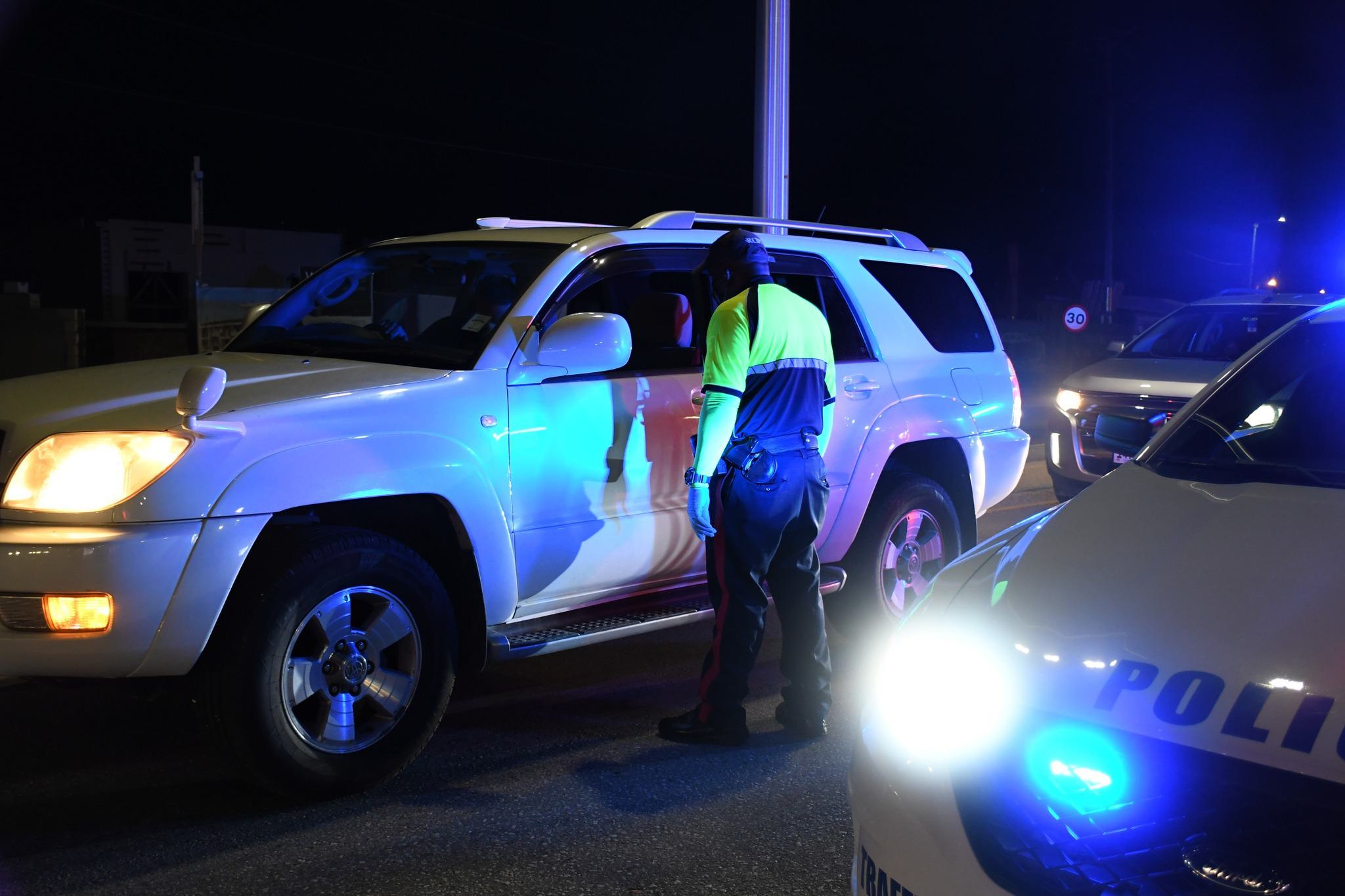
Police conducted Operation Hummingbird on the 15th and 22 February, and the 1st and 8th March 2026, in response to reports of reckless and dangerous driving in the Eastern Districts, particularly by motorcyclists. Enforcement focused on Frank Sound Road and Seaview Road toward East End, as well as Bodden Town Road, Rum Point Road and Shamrock Road. Officers issued 175 tickets, including 95 for speeding, with support from the Air Operations Unit. Four micro-mobility riders have been prosecuted. Police say enforcement will continue across the island, including in West Bay, targeting offences such as illegal window tints and missing licence plates.
Previously in 2025, the prevalence of poor driving practices was clearly apparent on the roads again in the early part of the year. As a result, in June the RCIPS initiated Operation Clyro, a comprehensive and intensive road safety campaign to tackle the scourge of careless driving in Cayman. Subsequently, in July 2025 the next phase of the NRSS was deployed by Government. Entitled “Smart vs. Reckless”, it proved ironic that it was launched on the same day that sadly, separate road traffic accidents resulted in two fatalities.
All of these road safety awareness and enforcement schemes involve a traditional and digital media outreach and an increased police presence targeting those foolish enough to drive under the influence, with excessive speed, or negligently. Infractions such as dangerous manoeuvres, mobile phone use, poor signalling, and other legal violations such as unroadworthy vehicles, seatbelt use, expired registrations, and unlicensed drivers and vehicles were all being targeted and a considerable amount of traffic tickets were issued as a result. In 2025, a total of 6,877 tickets for a multitude of traffic offences were issued, which speaks volumes about the standard of driving on our relatively small islands.
Whatever the causes, these statistics underscore the urgent need for targeted interventions to address the deteriorating state of road safety in the Cayman Islands.
Several other less reprehensible but equally dangerous factors contribute to road accidents in the Cayman Islands, including distracted driving, driver fatigue, lack of driving experience, poor road conditions, and mechanical failures. These elements collectively contribute to the concerning frequency of road incidents in the region.
All things considered, it is crucial that drivers know the rules of Cayman’s roads. You can find them here.
Bus Driving Standards Enforcement
In November 2025, the Government proposed measures to ensure tougher standards for Grand Cayman’s public bus drivers, including increased penalties for poor driving and a system that would allow passengers to report unsafe behaviour.
The measures would include a performance scorecard for operators, with drivers facing the loss of their licence after repeated violations. The proposals form part of a broader effort to improve the reliability, safety and frequency of the island’s bus service, alongside plans for a new depot in Savannah to support more regular routes. It's not clear when these new rules would be activated.
Drive Safely in Cayman - A Driving Guide by Graham Walker

National Road Safety Plan
A comprehensive road safety plan for the Cayman Islands released in November of 2023, outlines strategies for the government to decrease fatalities, injuries, and offenses on the islands' roads over the next 15 years. Proposed measures include the implementation of sidewalks along all roads, the introduction of speed cameras, the creation of cycle paths and stricter enforcement with increased penalties for traffic offenses.
The primary objectives include achieving a 30% reduction in road fatalities by 2028 and ultimately eliminating them entirely by 2038. The release of this plan coincides with the ongoing challenge of a higher number of road deaths in the Cayman Islands, particularly in Grand Cayman, in comparison to many other developed countries.
The strategy outlines actions that could be taken almost immediately including stricter penalties for traffic offenses such as driving under the influence, speeding, and distracted driving. It emphasizes enforcing existing distracted driving laws, targeting high-risk behavior, and investing in effective public education campaigns. Additionally, measures include implementing lower speed limits in pedestrian-heavy areas, enhancing safety for vulnerable road users, and prioritizing the development of safer roads.
Longer term plans include rigorous research on emerging vehicle and infrastructure technology, strengthening penalties for drink-and drug-influenced driving, and developing a speed camera strategy. Collaboration with the police for enhanced enforcement, creating national programs, and improving road design to include bike lanes are part of the plan. Road safety education is emphasized for all age groups, with a focus on children, media campaigns, and driver education programs.
The report also recommends a new heavy vehicle strategy and enhancing the government vehicle fleet with safety technologies, implementing a graduated licensing scheme for young drivers, providing comprehensive crash data analysis, and supporting the development of safer vehicles in general.
Traffic Statistics at a Glance
(As of March 2026, complete traffic statistics for 2025 are not yet available)
Currently on the Roads
- 4,551 cars were imported in 2024
- 50,343 actively licensed vehicles were on the road by mid 2025
- 11,798 unlicensed vehicles on the road by mid 2025. Some of which may be stored or immobile.
- Total of 65,295 driver’s licences issued or still valid by mid 2025
Traffic Offenses in 2024/2025
- 324 tickets issued for drivers using a mobile phone while operating a vehicle (2024)
- 624 traffic fines issued for vehicle window tint in excess of the permitted limit (2024)
- RCIPS issued over 2,162 speeding tickets in 2025, a decrease of 33% from the total issued in 2024
Electric Vehicles
- 781 electric vehicles, 1060 hybrid vehicles, and 27 propane vehicles licensed in Cayman by mid 2025
- Over 27 public vehicle charging locations (with 70 charge points) in the Cayman Islands as of November 1st, 2025
Road Accidents in 2025
- 3,408 road collisions, marking a 5% increase from 2024. That's more than 9 a day. Yep.
- 6 road collision fatalities, total of 33 killed or seriously injured
- Speeding and DUI identified as primary causes, with 277 individuals brought before the court for DUI-related offenses in 2025
- 65% of DUI offenses involved those driving at double the 0.07% drink-drive limit or more. 25% were 3 times over the legal limit or more.
- Over 65 car crashes per week in 2025. 🤦🏽
Sources: RCIPS, ESO, DVLA, CI GOV, CITA
Tackling the Road Safety Problem
Cayman’s road death rate is six times higher than the UK’s, with evidence suggesting speeding, DUI, and poor driving behaviour are the key causes, coupled with a lack of enforcement from local traffic police. Whilst it would be very easy to point the blame at certain driver demographics (social media users often do), it is a common belief held in Cayman that existing driver testing is outdated and ineffective, and behaviour-focused solutions, such as simulator-based re-testing, is the only way to meaningfully improve road safety. Particularly as the current driving population (like the actual population) is made up of up to 140 countries, each with their own standards and driving practices.

The After the Impact video series is a public outreach road safety campaign highlighting the human consequences of serious road collisions in the Cayman Islands. Through firsthand accounts from first responders and others affected, it aims to encourage safer driving and more responsible choices on Cayman’s roads. You can watch the series here. Since the release of the series in 2025, as of March 2026, it has been viewed 1,264 times. There are over 50,000 licensed vehicles on Cayman's roads.
Possible Solutions
- Liberalise the taxi industry and allow use ride-sharing apps to reduce drink driving
- Explore robo-taxis as a safe, forward-thinking transport option
- Redesign dangerous road layouts and intersections to reduce accidents
- Set realistic speed limits and enforce them consistently with speed cameras (Government plans to fund speed cameras in the 2026–27 budget, pending regulations and Cabinet approval, with phased installation at high-risk locations to improve road safety).
- Regulate electric bikes, scooters and similar devices with testing, licensing and insurance (Revised legislation should come into effect March 2026)
- Use AI cameras to detect and penalise distracted driving
- Ban or restrict unsafe vehicles and improve vehicle inspections, emissions and noise testing
- Improve cyclist safety with bike lanes and equal enforcement for all road users**
- Introduce a licence points system, higher penalties for repeat offenders and insurance-based incentives for safe driving
**In January 2026, it was announced that the National Roads Authority (NRA), operating under the National Road Safety Committee, plans to introduce new “3 FEET – IT’S THE LAW” signs across the road network as part of wider road safety initiatives.
Once approved by Cabinet and formally incorporated into the Cayman Islands Road Code, the signs will be installed in areas with heavy bicycle use, including routes popular with recreational cyclists and commuters, such as South Church Street and other major roads.
Traffic Enforcement Consultancy Bid
In February of 2026, Government issued a request for proposals seeking consultants to design an automated traffic enforcement and management system, as congestion and road accidents continue to rise on Grand Cayman. Rather than focusing on a much-needed public transport system upgrade, the Government has taken the approach that technology-enabled enforcement is more important as part of its long-term National Road Safety Strategy and “Road to Zero” plan. The consultants will ultimately develop the legal, operational and technical framework for phased implementation, including automated speeding enforcement. Officials stress the goal is improved safety, transparency and accountability, and that any system will be carefully designed to suit Cayman’s needs, with input from multiple agencies.